
Quick answer
Mauritius snorkeling sharks are accessible year-round through boat-based dive operators departing from the north coast between 07:00 and 10:00 for optimal visibility. Blacktip reef sharks are the most common species, typically seen at depths of 3 to 8 meters over coral reefs and sandy channels. Encounters happen at designated sites offshore where sharks feed naturally—no baiting or cage equipment is involved. Operators provide briefings on approach distance and body positioning before entering the water.
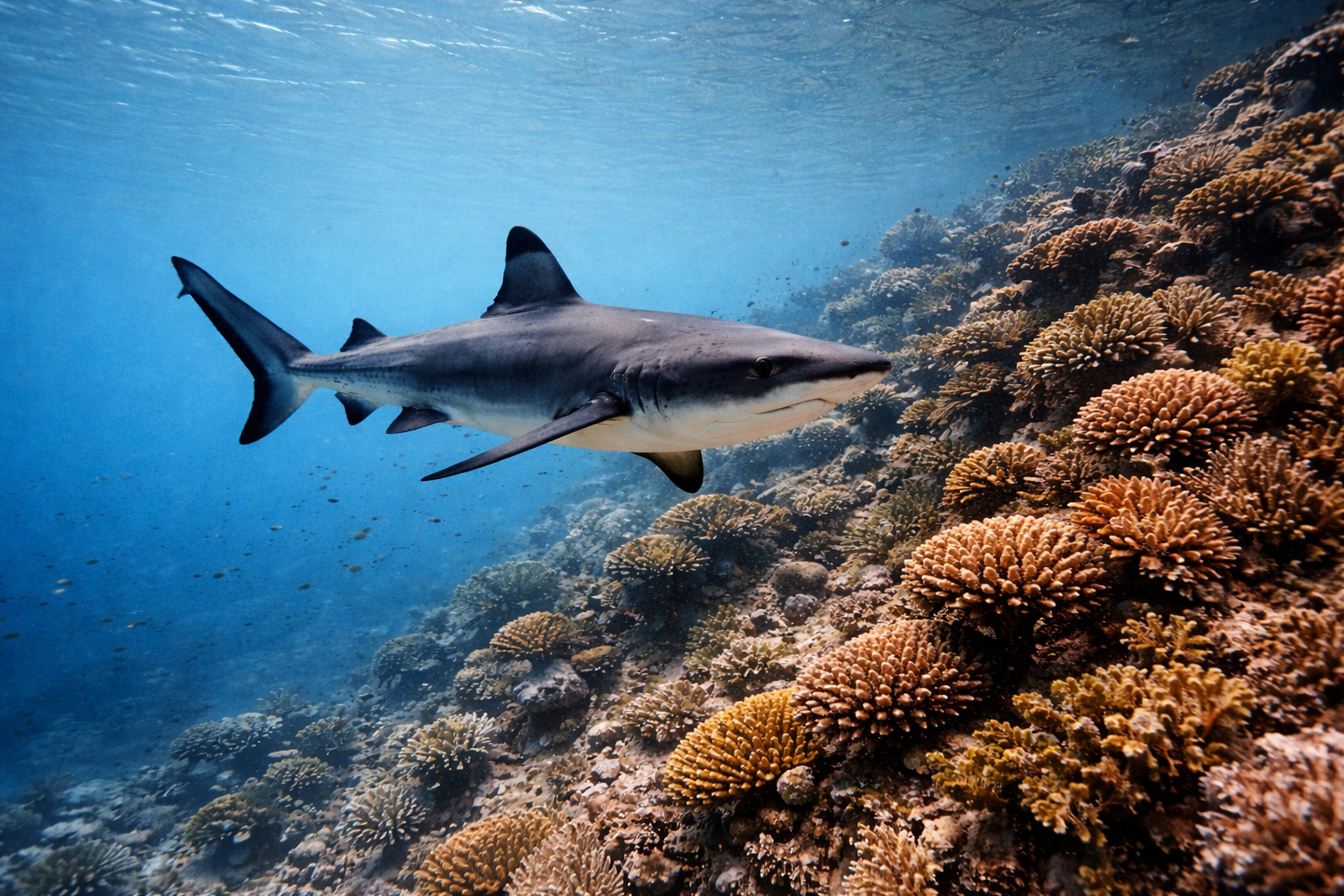
Blacktip reef sharks patrol the shallow reefs between Grand Baie and Trou aux Biches in groups of four to twelve individuals, their dorsal fins breaking the surface during early-morning feeding cycles. The species reaches 1.6 meters in length and shows little interest in humans when approached calmly at snorkeling depth. Nurse sharks rest on sandy bottoms during daylight hours, camouflaged against seagrass beds, while leopard sharks appear less frequently in the same zones during seasonal migrations. Snorkeling with sharks in Mauritius requires a boat transfer—no shore-accessible sites offer reliable sightings. Licensed operators run two-hour excursions that depart before 10:00 to catch morning light and calm sea conditions. The skipper motors to GPS-marked reefs where sharks congregate, anchors at a safe distance, and briefs snorkelers on neutral buoyancy and horizontal body posture. You enter the water in small groups, drift along the reef edge, and observe from 2 to 3 meters above the sharks as they glide beneath. Operators do not feed or attract sharks; the animals are present because the reef provides natural hunting grounds. Blacktip reef sharks exhibit predictable behavior: they circle at mid-depth, occasionally rising to investigate movement but veering away when a snorkeler remains stationary. Sudden splashing or rapid descent triggers avoidance, not aggression. The shark's black-tipped fins and white underbelly make identification immediate. Nurse sharks, by contrast, remain motionless unless startled, their barbels visible when resting on coral rubble. Visibility ranges from 15 to 25 meters depending on tide and wind—morning departures yield the clearest water. Safety protocols are standard across operators: no jewelry, no reflective surfaces, no reaching toward sharks. The guide stays in the water throughout, positioned between the group and deeper channels where larger pelagic species pass. Most excursions include two snorkel stops—one over a shark zone, one over a coral garden—allowing 30 to 40 minutes of in-water time per site. Mauritius snorkeling sharks deliver close-range observation without manufactured drama; the animals are habituated to boats but not dependent on human presence.
“Blacktip reef sharks circle at mid-depth, occasionally rising to investigate movement but veering away when a snorkeler remains stationary.”
Best Time for Mauritius Snorkeling Sharks Expeditions
The optimal window for shark snorkeling expeditions in Mauritius is during the early morning hours, specifically between 07:00 and 10:00. This timeframe provides the most favorable light for visibility and ensures calmer sea conditions for boat-based travel to offshore locations.
Summer (Nov–Apr)
Moderate25°C–31°C; higher humidity
Warm waters increase marine activity but require careful weather monitoring due to cyclone risks.
Winter (May–Oct)
Low19°C–24°C; dry and cool
Lower temperatures and stable conditions often result in clearer underwater visibility.
Early Morning (07:00–10:00)
Low—
Calm seas and optimal light levels provide the best environment for spotting shark species.
Verdict: The best opportunity for these expeditions is Monday through Thursday during the shoulder months of April or October, targeting the 07:00–10:00 arrival window.
Operating Hours for Mauritius Snorkeling Sharks Trips
The offshore environment remains accessible 24 hours a day, though actual boat-based snorkeling expeditions operate according to marine conditions. Visitors should coordinate with local operators to align departures with safe sea access.
| monday | 00:00–23:59 | |
|---|---|---|
| tuesday | 00:00–23:59 | |
| wednesday | 00:00–23:59 | |
| thursday | 00:00–23:59 | |
| friday | 00:00–23:59 | |
| saturday | 00:00–23:59 | |
| sunday | 00:00–23:59 |
How to Reach Mauritius Snorkeling Sharks Locations
Shark snorkeling locations are situated offshore along the North Coast of Mauritius. Access to these sites is restricted to professional boat-based dive expeditions authorized to navigate to open-water areas.
Direct to Grand Baie or Trou aux Biches coastal hubs
Registered excursion operator from North Coast jetties
M2 motorway toward Grand Baie
Preparation Checklist for Mauritius Snorkeling Sharks
Shark snorkeling in Mauritius requires advance booking with licensed operators and proper ocean safety preparation.
-
Book a certified operator in advance — Offshore shark encounters require boat-based expeditions with licensed guides.
-
Bring valid photo identification — Operators require ID verification for liability and marine permit compliance.
-
Pack reef-safe sunscreen only — Chemical sunscreens damage coral ecosystems where sharks feed.
-
Confirm swimming ability with operator — Open-ocean conditions demand confident swimming in currents and depth.
-
Arrange 07:00–10:00 departure slot — Early morning offers optimal visibility and calm seas for safe shark observation.
-
Wear a rash guard or wetsuit — Provides sun protection and thermal regulation in extended water exposure.
Interesting Facts About Mauritius Snorkeling Sharks
The waters surrounding the North Coast of Mauritius serve as a complex marine habitat supporting various shark species. Understanding these predators is vital for maintaining the balance of the local coral reef ecosystems.
Blacktip reef sharks are common
These sharks are frequently sighted in shallow coastal waters and are known for their distinct black-tipped fins. They primarily feed on small fish and crustaceans found near the reef structure.
Whitetip reef sharks prefer deeper crevices
Often found resting on the sea floor during the day, these sharks are nocturnal hunters. They possess slender bodies adapted for navigating narrow passages within the coral.
Bull sharks inhabit deeper offshore zones
While less common in snorkeling shallows, these sharks occasionally frequent the deeper channels around the North Coast. They are highly adaptable and capable of moving between saltwater and brackish environments.
Apex predators maintain population health
Sharks play a critical role in the marine food web by removing sick or weak individuals. This natural selection process helps keep fish populations robust and healthy.
Corals provide essential shark nurseries
The complex structure of the North Coast reefs offers protection for juvenile sharks. These areas act as critical nursing grounds before the sharks reach adulthood and move to open waters.
Sensory adaptations aid navigation
Sharks utilize electroreception via the ampullae of Lorenzini to detect prey hidden within the sand. This sense is essential for hunting in the low-light conditions often found near deep drop-offs.
Check availability
Frequently Asked Questions About Mauritius Snorkeling Sharks
Everything you need to know about mauritius snorkeling sharks